
Following the seizure, Moscow issued a strong condemnation asserting that no country has the right to use force against vessels lawfully registered under another state's jurisdiction, particularly on the high seas.
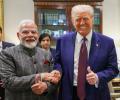
The agreement addresses non-tariff barriers and promotes increased trade in technology products and cooperation between the two countries.

India and the US have decided to reschedule their meeting to finalize the interim trade pact due to recent developments and implications, including changes in US tariffs.


Indian eateries are adapting to the LPG crisis by cutting menus, increasing prices, and switching to alternative fuels like coal, as LPG supplies are disrupted due to global events. State authorities are cracking down on hoarding and black marketing of LPG cylinders.

Russia and China on Saturday condemned the United States airstrikes on Venezuela and the capture of its president, Nicolas Maduro and his wife.

'The next two to three weeks will not be decided in Washington.' 'They will be decided in Tehran, in whatever calculation Iran makes about the costs of continued resistance against the costs of appearing to have yielded.'

India has advised its nationals to avoid all non-essential travel to Venezuela following the capture of President Nicols Maduro by the US. The Ministry of External Affairs has also asked Indians in Venezuela to exercise extreme caution and restrict their movements.

The Sports Ministry is keen to bring Formula 1 back to the Buddh International Circuit in Noida in the near future.
Government has no role in fixing prices of natural gas produced from areas auctioned under NELP and only approves the pricing formula, petroleum ministry has told a committee of Secretaries appointed to look into the vexed issue.
On Friday, during the weekly media briefing, MEA spokesperson Randhir Jaiswal, when asked about media reports that some Indian oil companies have stopped taking oil from Russia, had said India has made clear its approach on the issue.
It added this wasn't aimed at benefiting Reliance Industries Ltd alone.

A 500 per cent tariff would effectively shut out India's goods and services exports to the US.

According to a situation report issued by the DGS, the oil containment measures have temporarily stabilised the situation, but full risk mitigation will happen only on successful commencement of saturation diving to extract the remaining trapped fuel oil from the vessel, MSC Elsa 3.

'The contours of the trade deal need to be reworked now.'
The department believes dividend from CPSUs is a return on investment made by the government.

'That journey across India has changed me forever.'
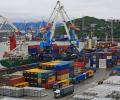
The country's exports rose marginally by 0.61 per cent to $36.56 billion in January, while trade deficit widened to a three-month high of $34.68 billion, government data showed on Monday.
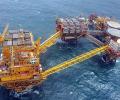
ONGC's overseas arm applied for a sanctions waiver to access $500 million dividend from two Venezuelan projects.

Registered and eligible candidates can download their GATE 2026 from the official website gate2026.iitg.ac.in, using their valid login credentials.

India has clarified its position on the proposed interim trade agreement with the US, stating that the joint statement remains the basis for mutual understanding. Amendments to a White House fact sheet reflect shared understandings, with both sides working towards finalizing the agreement.

Following a Supreme Court setback, Donald Trump has announced an increase in global tariffs from 10% to 15%, impacting international trade relations and raising concerns about economic repercussions.

India's exports jumped by 19.37 per cent to $38.13 billion in November, while imports dipped by 1.88 per cent to $62.66 billion, according to government data released on Monday.

Commerce and Industry Minister Piyush Goyal announced that an interim trade agreement between India and the US is likely to be signed in March and operationalised in April, with chief negotiators meeting in Washington to finalize the details.

India said it is closely monitoring the evolving situation in Venezuela and reaffirmed its support for the well-being of people of the country.

India has called for a ceasefire, release of all hostages, and peaceful resolution of the Israel-Hamas conflict through dialogue and diplomacy. The Centre informed Parliament that India welcomed the agreement on the first phase of the Gaza Peace Plan. The article also covers India's energy sourcing strategy and the release of Indian fishermen by Pakistan.
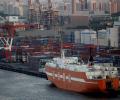
India's merchandise exports grew in the first three weeks of November compared with the same period last year, according to preliminary government data, Commerce and Industry Minister Piyush Goyal said on Tuesday. The uptick comes despite globa

Among Sensex firms, Eternal, Tata Motors, State Bank of India, Adani Ports, NTPC, IndusInd Bank, Bajaj Finance, Asian Paints, Axis Bank and Sun Pharma were the major losers. Bharti Airtel, Tata Steel, Mahindra & Mahindra, Hindustan Unilever, Nestle and Maruti were among the gainers.

'Incidentally, Prime Minister (Modi) and President Trump have also spoken on the phone on eight occasions during 2025, covering different aspects of our wide-ranging partnership'

New Delhi will substantially reduce tariffs on industrial and agricultural goods while continuing to protect sensitive sectors. Tariffs on some agricultural products that are not traditionally considered sensitive will be brought down to zero, while in the case of relatively sensitive items, duties will be reduced in a graded manner and quotas will be imposed.

The Mumbai Bench of the National Company Law Tribunal (NCLT) on Tuesday gave its approval to Vedanta Limited's demerger proposal, clearing the way for the group to reorganise its operations into five distinct, sector-specific entities.

'No, India and China were not about to go to all-out war over a few rocks of Galwan.' 'The full picture of what went on at the highest level between two heads of State will not be known for a very, very long time and rightly so,' points out Colonel Anil A Athale, former head of the history division, ministry of defence.

India, the biggest contributor to world demand for oil, will bring into effect in an overhaul of its drilling policy. This comes after more than a year of preparation and will boost the exploration and development of India's oil and gas sector along with increased participation by foreign drillers

The company had initially objected to audit by CAG for time barred years as per Production Sharing Contract and had not accepted the 'exceptional circumstances' advanced by the ministry

Putin's State visit will centre on fixing the huge India-Russia trade imbalance, with both sides pushing to lower duties, ease non-tariff barriers, and seal a landmark mobility pact to send more Indian workers to Russia.

Russia's state-owned oil firm Rosneft has agreed to supply up to 500,000 barrels per day (bpd) of crude oil to Indian upstream oil and gas major Reliance Industries (RIL) in the largest-ever energy deal between the two countries, Reuters reported on Thursday. The 10-year agreement amounts to 0.5 per cent of global oil supply and is valued at roughly $13 billion per year at current prices, it said.

The Indian economy is likely to grow at 7.4 per cent in 2025-26, up from 6.5 per cent in the previous fiscal, mainly on account of better performance of manufacturing and services sectors, as per the government data released on Wednesday.

China has reacted positively to Russian President Vladimir Putin's visit to India, emphasizing the importance of trilateral ties between China, Russia, and India for regional and global peace and stability.

Baghaei also alleged that recent unrest in Iran was fuelled by foreign interference, claiming riots were triggered by "very evident" interventionist remarks by US and Israeli officials.

India and Russia are poised to sign multiple agreements to bolster cooperation in various sectors, including trade and healthcare, during Russian President Vladimir Putin's visit to New Delhi. Discussions will also address the Ukraine conflict and efforts to increase Indian exports to Russia.
